
EYFS
Curriculum
EYFS
What is taught?
The core intent of the Western House Academy Early Years Foundation Stage (EYFS) curriculum is to provide a values-based, challenging, and nurturing educational experience that secures the essential foundational knowledge and skills required for future academic success, whilst fostering the development of the whole child. We actively ensure an inclusive environment where the curriculum and teaching practices are meticulously adapted to meet the diverse and individual learning needs of all pupils, thereby guaranteeing access and opportunity. We intend for all pupils to leave EYFS as confident, resilient, and independent learners with a deep sense of emotional well-being and a strong foundation in our core values. Our curriculum is intentionally designed to hold high expectations in both academic achievement, particularly in early reading, number work, effective communication, and exemplary behaviour, ensuring children acquire the necessary self-regulation and social skills for school readiness and a positive transition into Year 1. We aim to ignite a passion for lifelong learning by nurturing natural curiosity and equipping every child with the confidence and self-efficacy to embrace new challenges.
How it is taught?
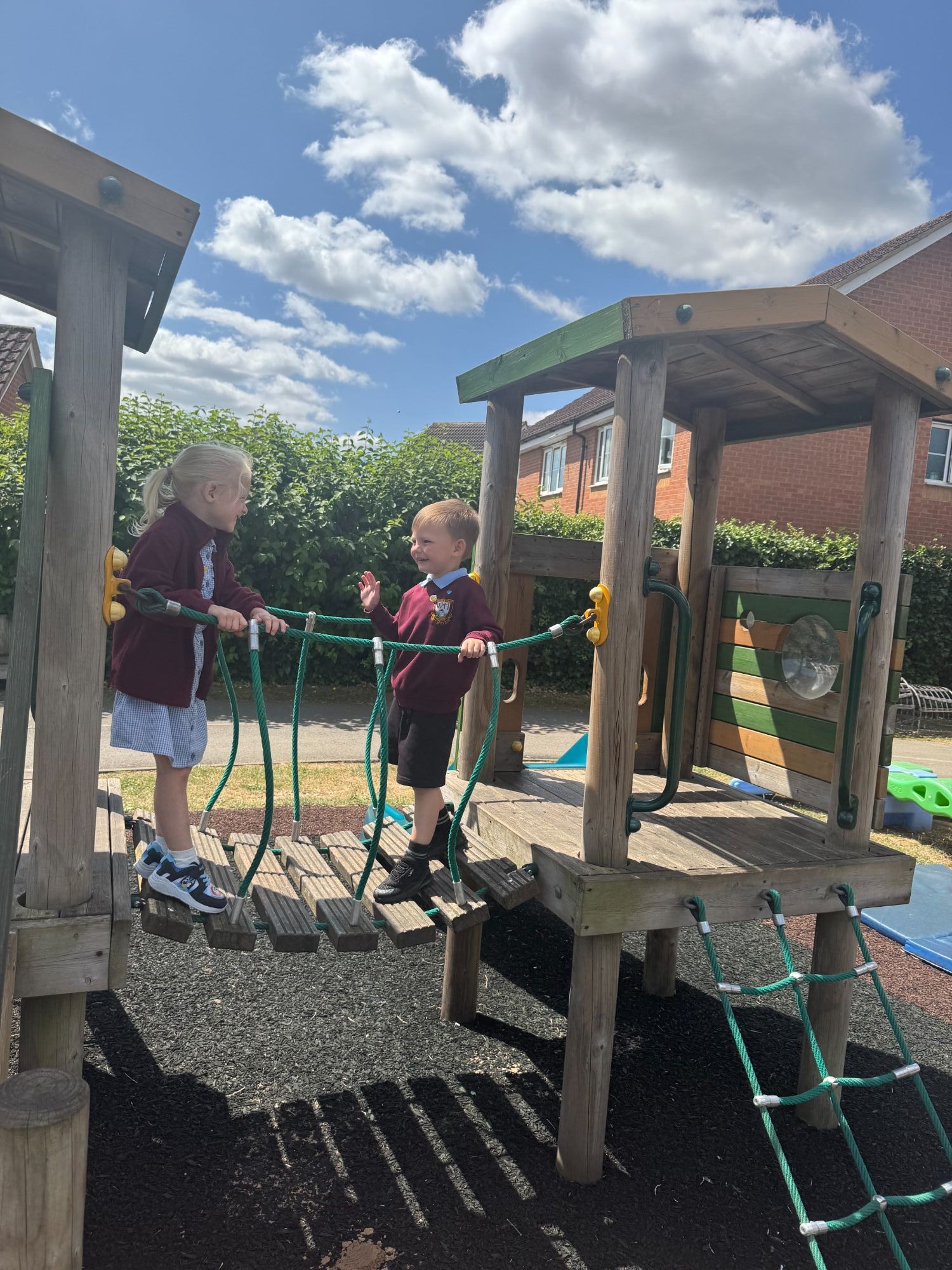
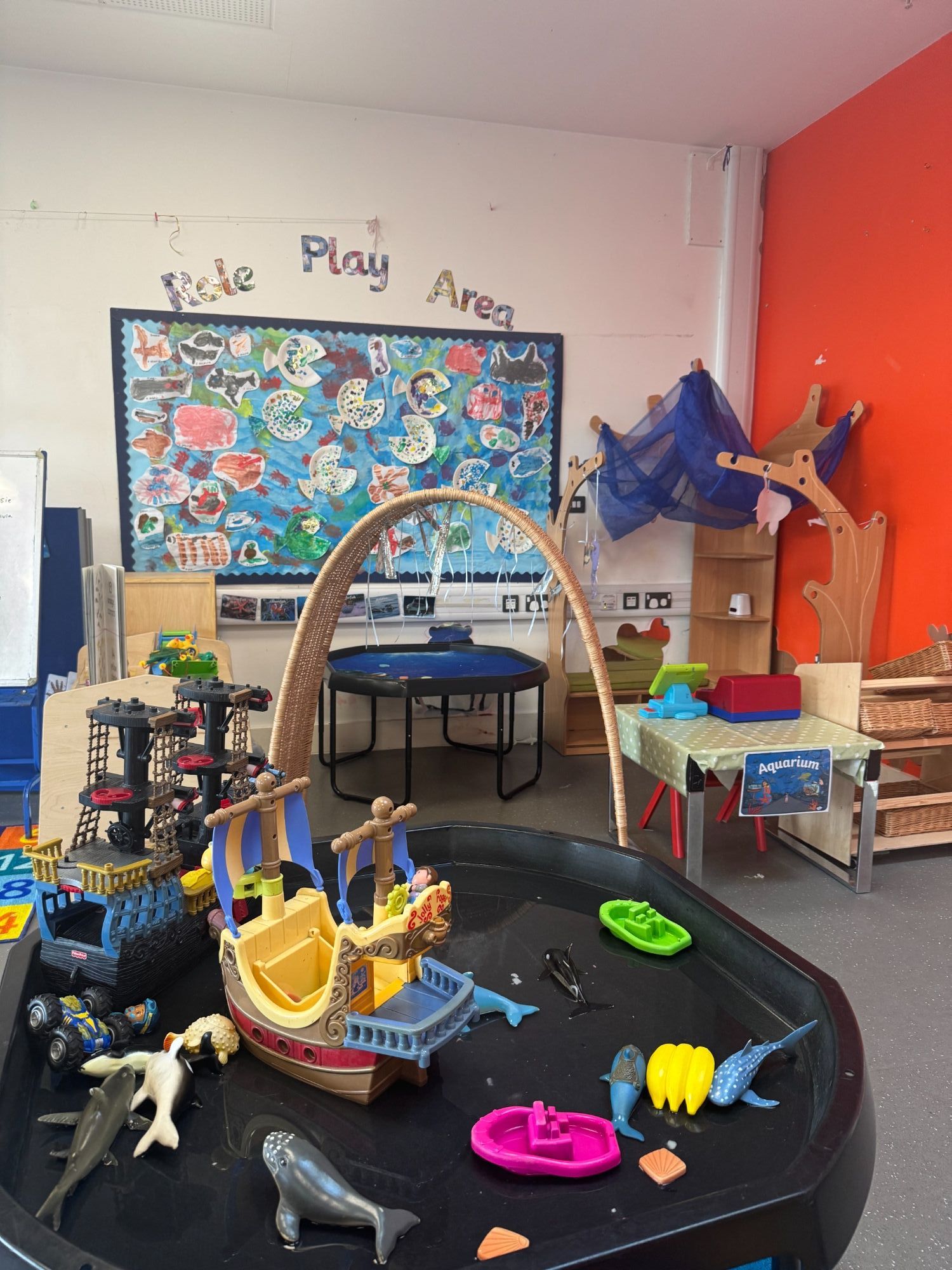
Our EYFS is based on the Development Matters guidance and the EYFS Statutory Framework, using a dynamic and highly adaptive model of delivery. We offer continuous provision in specially designed classrooms, each hosting core areas like reading, writing, maths, and construction, alongside rotating enhanced zones such as creative and role-play areas to meet diverse interests. Crucially, learning is actively promoted outdoors throughout the day. Teaching involves focused, designated learning times through group sessions. Our curriculum is highly flexible; planning is kept in draft form and continually adjusted to meet the specific needs and interests of the current pupil cohort, ensuring learning is meaningful and maximises development for all.
Our Curriculum
Our curriculum is intentionally designed to be inclusive, ensuring it meets the diverse interests and individual needs of all children. We ensure teaching focusses on securing fundamental knowledge and skills alongside promoting our core key values, embedding equality to foster responsible, compassionate citizens. All instruction is delivered by providing children with various exciting and engaging opportunities that motivate them to learn and explore. To maintain responsiveness, our planning remains in draft form and is continually adapted throughout the year.
We adhere to the Seven Areas of Learning and Development:
Prime
-
Communication and Language
-
Personal, Social and Emotional Development
-
Physical Development
Specific
-
Literacy
-
Mathematics
-
Understanding the World
-
Expressive Arts and Design
We teach these crucial areas primarily through the medium of play, utilising the three Characteristics of Effective Teaching and Learning (CoETL) to guide our practice. This means children are given plentiful opportunities to play and explore (finding out and using what they know), engage in active learning (being involved and concentrating), and create and think critically (having their own ideas and making links). This approach ensures children are deeply engaged, motivated, and develop the fundamental skills needed to become confident learners.
What have pupils learnt?
Early Maths
Across the Early Years Foundation Stage, pupils develop a deep understanding of early mathematics through systematic teaching. In Nursery, children build a strong foundational number sense through play using White Rose Maths. By Reception, pupils acquire depth in number and counting through the Mastery for Number programme, while mastering concepts of shape, space, and measure via targeted White Rose Maths units. Through this focused teaching and rich continuous provision opportunities, pupils confidently develop a strong understanding of number and fluency in mathematical language.
Early Reading
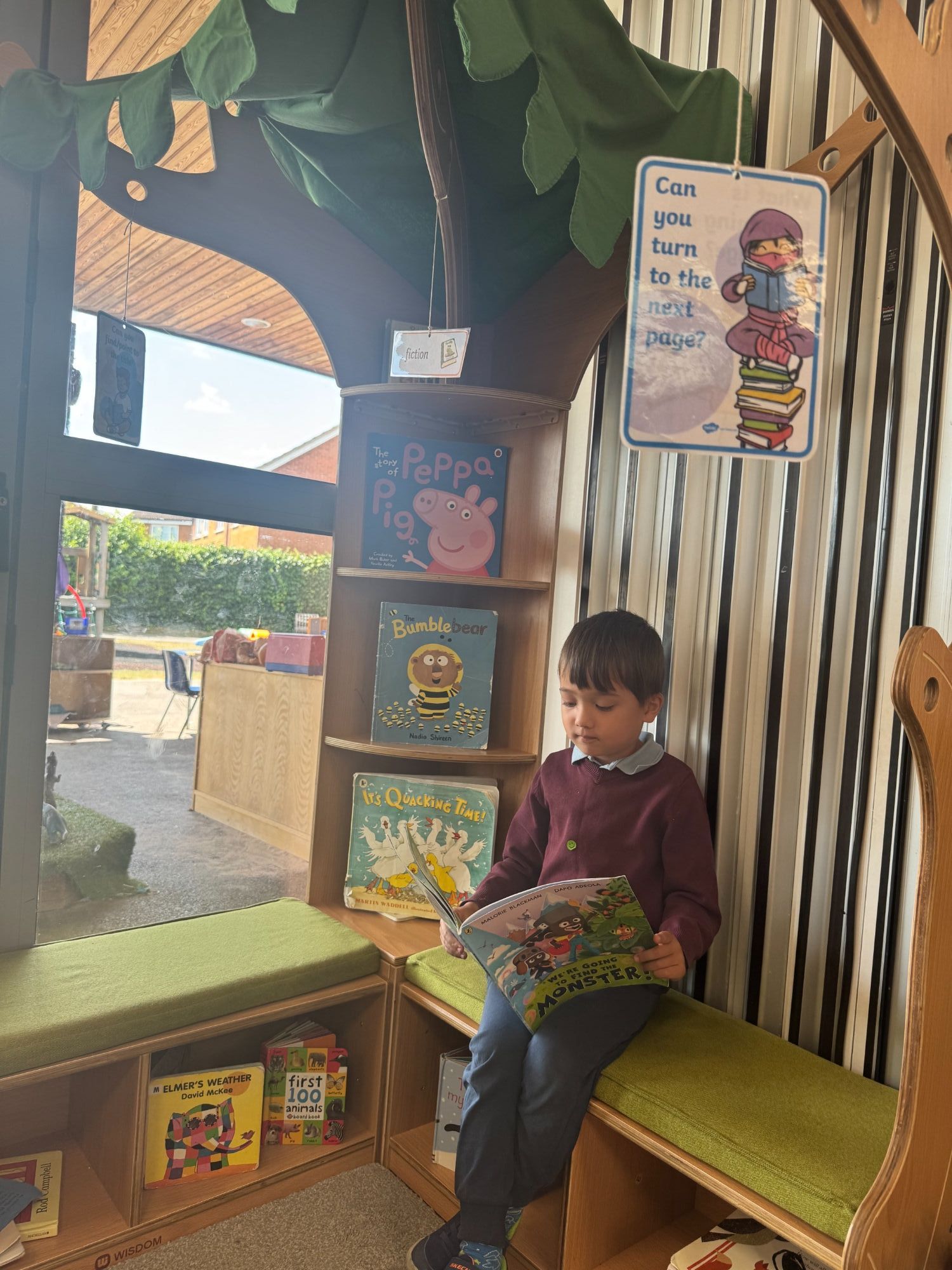
Pupils develop a strong foundation for future academic success through a strong emphasis on early reading. In Nursery, children master crucial pre-reading skills through Phase 1 phonics, learning to listen carefully, discriminate sounds, and perform oral blending and segmenting to prepare for letter sounds. In Reception, pupils make rapid progress through daily Essential Letters and Sounds (ELS) phonics sessions, learning grapheme-phoneme correspondences from Phase 2 through to the beginning of Phase 5. Children apply these skills weekly using fully decodable reading books precisely matched to their current phonics level. Additionally, through daily guided reading—read individually or in small groups—and whole-group reading with specifically chosen 'big books', Reception and Nursery pupils develop essential reading comprehension skills and a strong love of stories.
Early Writing
From the moment children enter Nursery, pupils develop essential fine and gross motor skills alongside early writing skills using the 'Scribble It' approach, which enables them to make meaningful marks through child-led play. In Reception, pupils transition to the 'Drawing Club' approach, where they learn to express their imagination and creativity through a wide variety of writing opportunities integrated across indoor and outdoor continuous provision. Through this approach, pupils learn to apply their developing writing skills with purpose, enjoyment, and growing independence.
Assessment in EYFS
Assessment in the Early Years Foundation Stage (EYFS) is a continuous and crucial process to understand children's development and learning needs. When children join us, we begin by completing our own in-house baseline assessment, which helps us gauge each child's current abilities, knowledge, and skills when they start school. When they join Reception, we also complete our in-house baseline, alongside the statutory National Reception Baseline Assessment (RBA).
Our primary method of assessment is through observations and interactions between staff and children as they engage in play and planned activities. These daily assessments are crucial, allowing us to immediately tweak the curriculum and provision to ensure it meets the specific interests and developmental needs of every child.
Finally, at the end of Reception, we complete the National EYFS Profile for each child. This profile summarises their attainment across the seven areas of learning, stating whether they have achieved or not achieved the Early Learning Goals (ELGs).
Supporting Your Child's Early Development
Every child is a learner from birth! For practical, expert-backed advice on early childhood development—including helpful guides on potty training, toothbrushing habits, and getting ready for Reception—visit Learners from Birth. Click here to access free resources and guidance to support your child’s learning journey from ages 0 to 5.